Bayswater House Clearance: Recycling and Sustainability Promise
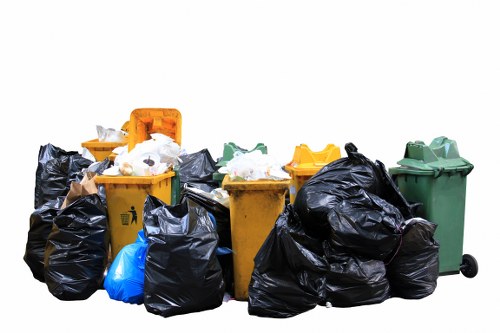 At Bayswater House Clearance we believe every clearance in Bayswater and neighbouring boroughs should prioritise an eco-friendly waste disposal area approach. Our sustainable rubbish area policy sets out how we manage materials, divert items from landfill, and support local reuse networks. From initial collection to final delivery at approved facilities, we work to reduce the environmental impact of house clearances while supporting community reuse.
Our mission is simple: to provide an ethical, efficient clearance service while delivering measurable sustainability outcomes. We use clear sorting protocols on-site so that wood, metal, textiles, glass, paper and electronic waste are separated at source. This reduces contamination and enables higher quality recycling at transfer stations managed by local authorities and private recycling hubs.
 We set an ambitious recycling percentage target of 85% for all domestic clearances, with a long-term goal to exceed 90% through improved reuse partnerships and operational changes. That target includes materials reclaimed for reuse, items donated to charities, and waste sent to authorised recycling transfer stations in the City of Westminster and the Royal Borough of Kensington & Chelsea, as well as nearby West London transfer facilities.
How the Bayswater approach to waste separation supports reuse
 We tailor sorting to reflect the local boroughs' approaches to waste separation: typical divisions include glass, paper and card, mixed recyclables, food/organic waste, textiles, and residual waste. In practice this means our teams arrive with labelled boxes and sacks so that items that borough recycling schemes accept remain suitable for kerbside or civic amenity processing.
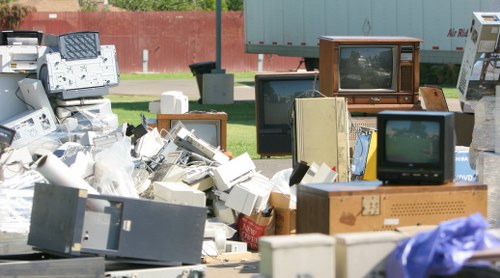
We also handle larger items that local bulky collections may not accept. Our processes ensure WEEE (electricals), furniture and mattresses are assessed for repair and reuse. Items in good condition are channelled to charity partners; those requiring specialist recycling go to accredited facilities. This two-step decision — reuse first, recycle second — is central to our sustainable rubbish removal model.
We maintain detailed records for every clearance so we can report the composition and destination of waste. This transparency helps us improve performance year-on-year and supports our claim to be a leader in eco-friendly clearance services in Bayswater. It also helps customers see how their clearance contributes to wider municipal recycling targets and local circular economy efforts.
Local transfer stations, partnerships and low-carbon logistics
We regularly use authorised transfer stations and civic amenity sites across West London. Rather than sending mixed loads to landfill, materials are taken to local waste transfer stations where further sorting and processing takes place under strict environmental controls. This ensures hazardous materials are handled correctly and recyclable fractions are recovered efficiently.
Partnerships with charities and reuse organisations are a cornerstone of our model. We work with local charities, community reuse centres and national organisations to donate serviceable goods including furniture, books, kitchenware and clean textiles. Typical partners include community centres, local charity shops and social enterprises that benefit from upcycled or repairable donations.
Our logistics are designed to be as low-carbon as possible. We operate a fleet of low-emission and low-carbon vans including electric and hybrid vehicles for inner-city collections. This reduces emissions in Bayswater's residential streets and helps us align with borough-level air quality and carbon reduction goals. For larger loads we deploy modern Euro VI vehicles or plan routes to minimise mileage and idle time.
We also offer clients clear options at booking stage to prioritise donation, reuse, or recycling. By choosing the reuse-first option, customers enable our teams to divert usable items away from disposal and into charity channels, social housing refurbishment schemes, and community repair cafés. When reuse isn't possible, materials are separated for recycling streams — metals to metal recyclers, wood to biomass processors, and mixed recyclables to transfer facilities.
The following practices underpin our sustainable services:
- Source separation: careful on-site sorting to maximise clean recyclable streams;
- Charity redistribution: partnerships to ensure reusable items find new homes;
- Responsible disposal: use of accredited transfer stations and licensed recyclers;
- Low-carbon transport: electric and hybrid vans where practical to reduce emissions.
 We monitor performance against our recycling percentage target and publish internal audits to identify improvements. Staff training emphasises accurate sorting, safe handling of hazardous items (like batteries and WEEE), and the importance of documenting donations. This ensures each clearance contributes to a measurable reduction in waste sent to landfill.
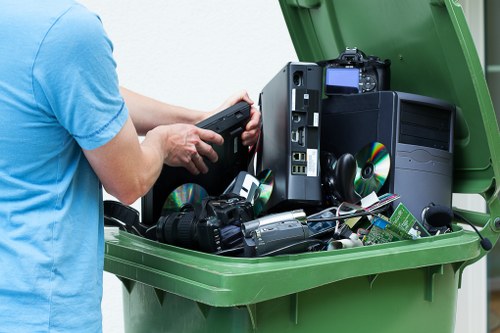 Choosing Bayswater house clearance services means choosing a partner committed to the circular economy. Whether you need a single-room clear-out or a full property clearance, our systems prioritise donation, repair and recycling over disposal. We treat every item as a potential resource — rehomed, refurbished or recycled — reflecting our commitment to sustainable rubbish solutions across Bayswater and the surrounding boroughs.
We continually explore new avenues to increase material recovery rates: expanded charity networks, collaboration with municipal recycling initiatives, and investment in electric transport and efficient routing software. Our ambition is to model how local clearance businesses can support borough-level recycling strategies and contribute to community wellbeing.
By combining practical on-site sorting, partnerships with local reuse organisations, use of transfer stations and low-carbon vans, our eco-friendly waste disposal approach delivers measurable environmental benefits. For sustainable clearance in Bayswater, our blend of reuse-first policies and rigorous recycling targets makes a positive difference for residents and the local environment.